Originally published at: Author Interview: Evan Peterson, Choice of Games author - Choice of Games LLC
Happy Pride! Choice of Games is proud to be gender-inclusive and LGBTQ±affirming all year round, but during the month of June, we’re featuring writers whose work connects especially closely with those themes.
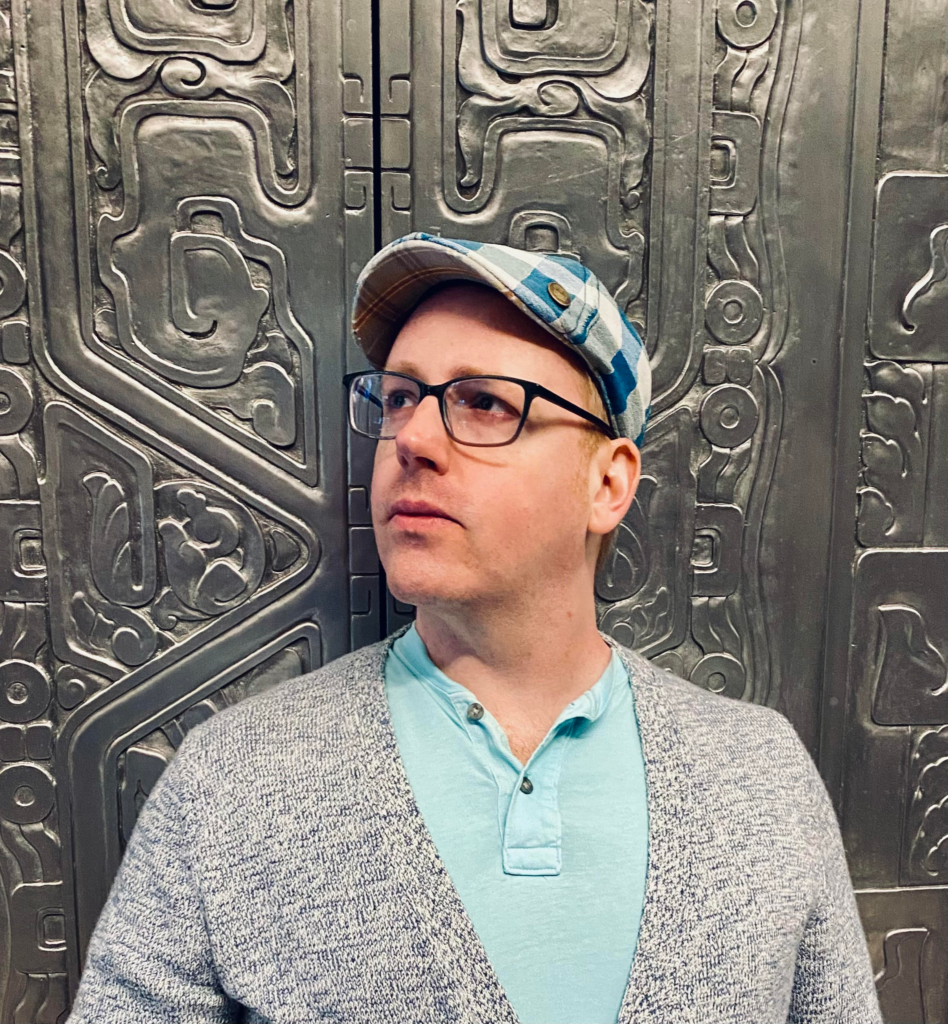
Today we’re sitting down with Evan Peterson, author of Drag Star! and Posthuman: Guardians vs PSION.
Your game Drag Star! (gotta remember that exclamation point!) was both hilarious and impressive in its attention to detail about drag culture. What’s something that someone outside the drag world should know about it that they might not?
It’s an art form found throughout history and around the globe. It is nothing new; what we see on television is just the latest iteration. To some cultures, it was and is a sacred practice of transcending the physical body. To others, it was a high art form that created spaces for queer and trans people to meet and explore. It’s always been messy, it’s always made people uncomfortable, and it’s always been fun. It’s only now that we have the media technology to prove that drag is truly global. Every culture tells stories, every culture makes and wears costumes, and every culture dances and makes music. And most cultures have drag. It’s a human practice, a human art.
Outside of your interactive fiction, you’ve got a truly extraordinary range as a writer, encompassing both nonfiction and fiction in all genres. Your award-winning novel, Better Living Through Alchemy, is a perfect example of that range: a noir detective story with supernatural elements. What drew you to the detective genre? How did your addition of magic affect the way you wrote the mystery?
Thank you! I would say it’s the addition of the mystery that affected the way I wrote the magic! I had the idea for the climax, the big reveal, before any of the rest of the content of Better Living. I imagined an investigator breaking into a seedy lab and finding the shocking, supernatural source from which a certain recreational substance is harvested. My inspiration was the magical substance and the captive bodies undergoing occult experimentation, and the mystery itself was incidental to that. My favorite mysteries and thrillers are often not really “Whodunits,” but rather they ask questions about where and what is the murder weapon, where are captives being held, etc. But now I write mysteries, evidently. Drag Star! and Posthuman both include major mystery subplots, which give players more competing goal paths and more narrative intrigue.
On the nonfiction side, you’ve done a lot of commentary about queerness in the horror genre, especially classic horror writers like William S. Burroughs and Clive Barker. Who are some of your favorite current horror writers who incorporate queer elements into their work?
How much space have we got? I’ve been on a big Hailey Piper kick this year. She’s the trans lesbian horror punk we’ve been waiting for (The Worm and His Kings made me swoon). But so is Hiron Ennes, whose newest book is The Works of Vermin, which I adore. Nadia Bulkin and Priya Sharma have never published a boring story in their lives, and I’ll read anything they write. I also enjoy Sarah Gailey’s Spread Me and John Wiswell’s Someone You Can Build A Nest In.
We’re asking all of our authors this: How has your representation of LGBTQ+ themes in your writing evolved over the course of your career?
The more I learn about how the world really works, the more I want to disrupt injustice. Representation and inclusion are really low bars to clear. A truly diverse cast is an absolute minimum; I’m acknowledging that people exist. How revolutionary. From there, I can actually do some good and imagine a world that’s kinder and more just than our own. I enjoy busting monoliths and disrupting the comfort of people with too much power over others. A character like Vogue, a Black trans woman, went from supporting cast to team leader as the story of Posthuman evolved. It was natural progress for her character. Her powers make her the most fit to lead, so she does.
Intersectional representation is also essential to me now. Disabled people are queer too, and vice versa; many writers are afraid to explore what that actually looks like. And I try to write the world I see around me, which is more than a cast of seven archetypes.
Finally: how are you celebrating Pride this year?
I’ll probably go see some queer art and make some donations to causes I care about, but mostly stay home with my husband and our dog. One night of a raucous dance party is certainly on the agenda.